

ISBN-10
--
ISBN-13
--
Material ID : 24834
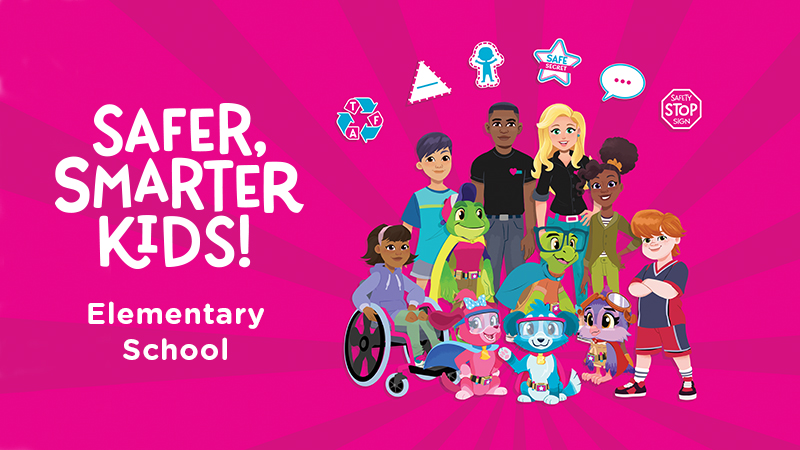
Lauren' Kids Safer, Smarter Kids Grade 4
Authors
Publisher
Lauren’s Kids- Safer, Smarter Kids
Category
Intervention
Description
The Safer, Smarter Schools curriculum is an evidence-based Kindergarten through 12th Grade personal safety and abuse prevention program developed by the Lauren’s Kids Foundation, lifelong educators, sexual violence prevention experts, developmental psychologists, with support and oversight from the Florida Department of Education. The curriculum, which fulfills Erin’s Law requirements in states across the country, was developed by child sexual abuse survivor, former classroom teacher, and internationally-recognized child advocate Lauren Book, M.S. Ed, and the aforementioned multidisciplinary team to teach children critical personal safety information in a developmentally and age-appropriate way. Effectiveness testing has shown a 77 percent learning gain in children’s knowledge of critical personal safety information after completing the program.
The program is a pedagogically sound, spiral curriculum based on best practices of developmental milestones; as a child’s world expands, so does the lessons' content to meet their increasing safety needs. The K-12 Safer, Smarter Schools program arms children with tools that protect them from physical and sexual abuse and teaches them about important safety skills such as accessing help, avoiding bullying, Internet safety, and empowerment. Each grade level contains five to eight lessons that are easily integrated into the classroom through benchmarks in academic areas including social sciences, reading, and health.
Safer, Smarter Schools is adaptable and uses a mix of engaging Emmy-Award winning videos, group and individualized lessons, and activities which enable all children to effectively learn critical safety strategies, no matter their learning style. Our program goes beyond the acquisition of safety knowledge into the application of learned skills to ensure students can apply important safety skills in real-life situations.
Throughout the curriculum lessons, students are armed with protective principles and vocabulary to teach them how to express their feelings and talk to a trusted adult. We know that 90 percent of the time when a child is being harmed, it’s at the hands of someone they, and their parents/caregivers, know and trust. Lessons such as “stranger danger” and “good touch, bad touch” are antiquated and misinformed. In Safer, Smarter Kids and Safer, Smarter Teens, students are taught to identify “safe” and “unsafe” secrets, situations, and people based on how these things make students feel (“safe” feelings include happiness, confidence, love, security, and excitement; “unsafe” feelings include nervousness, confusion, a sense that something is not quite right, secrecy, hurt, guilt, and shame). In older grades, we address issues adolescents face in relationships with peers and adults, such as balance of power, enforcing boundaries, mental health, and advocating for oneself and others.
Every course includes Comprehensive Teacher’s Guides with step-by-step instructions on how to teach each grade level of Safer, Smarter Kids and Safer, Smarter Teens curriculum programs in the classroom and “Teacher Tips” for best practices with information on how to present concepts to students with diverse backgrounds. Lessons are easily integrated throughout daily and weekly activities to support knowledge acquisition. Every lesson contains:
Welcome to introduce objectives and vocabulary
Optional Pre and Post Quizzes
Video Lesson
Scripted/Guided teacher-led lesson
Activities for practice and application
Caregiver/Parent letters (in English, Spanish and Haitian Creole)
The program is a pedagogically sound, spiral curriculum based on best practices of developmental milestones; as a child’s world expands, so does the lessons' content to meet their increasing safety needs. The K-12 Safer, Smarter Schools program arms children with tools that protect them from physical and sexual abuse and teaches them about important safety skills such as accessing help, avoiding bullying, Internet safety, and empowerment. Each grade level contains five to eight lessons that are easily integrated into the classroom through benchmarks in academic areas including social sciences, reading, and health.
Safer, Smarter Schools is adaptable and uses a mix of engaging Emmy-Award winning videos, group and individualized lessons, and activities which enable all children to effectively learn critical safety strategies, no matter their learning style. Our program goes beyond the acquisition of safety knowledge into the application of learned skills to ensure students can apply important safety skills in real-life situations.
Throughout the curriculum lessons, students are armed with protective principles and vocabulary to teach them how to express their feelings and talk to a trusted adult. We know that 90 percent of the time when a child is being harmed, it’s at the hands of someone they, and their parents/caregivers, know and trust. Lessons such as “stranger danger” and “good touch, bad touch” are antiquated and misinformed. In Safer, Smarter Kids and Safer, Smarter Teens, students are taught to identify “safe” and “unsafe” secrets, situations, and people based on how these things make students feel (“safe” feelings include happiness, confidence, love, security, and excitement; “unsafe” feelings include nervousness, confusion, a sense that something is not quite right, secrecy, hurt, guilt, and shame). In older grades, we address issues adolescents face in relationships with peers and adults, such as balance of power, enforcing boundaries, mental health, and advocating for oneself and others.
Every course includes Comprehensive Teacher’s Guides with step-by-step instructions on how to teach each grade level of Safer, Smarter Kids and Safer, Smarter Teens curriculum programs in the classroom and “Teacher Tips” for best practices with information on how to present concepts to students with diverse backgrounds. Lessons are easily integrated throughout daily and weekly activities to support knowledge acquisition. Every lesson contains:
Welcome to introduce objectives and vocabulary
Optional Pre and Post Quizzes
Video Lesson
Scripted/Guided teacher-led lesson
Activities for practice and application
Caregiver/Parent letters (in English, Spanish and Haitian Creole)
notes
No notes provided.
edition
Digital Edition
Pricing Models
No pricing models or cost proposal PDF documents found.
Ancillaries / Related Materials
No related materials found.
UTAH STATE BOARD OF EDUCATION
250 East 500 South
Salt Lake City, UT 84111-3204
Phone: 801.538.7807